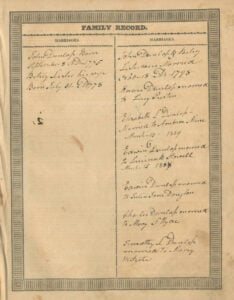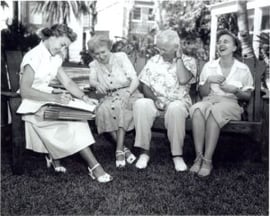
Discovering the existence of a family bible can be one of the most thrilling revelations in family history research. Original..
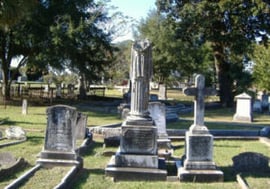
Continue readingGravestones have long served as the cornerstone of genealogical research. While the words they bear can be crucial sources of information about our ancestors,..
Continue reading →Online genealogical websites like AmericanAncestors.org, Ancestry.com, and FamiliySearch.org can be extremely helpful when researching your family tree. But what do you do when your search comes up empty, and you don’t have..
Continue reading →[Editor's note: This series of posts originally appeared in Vita Brevis in June 2021.]
While recently reviewing family research that I have been doing for some time, I came to the realization that I had learned some valuable lessons during..
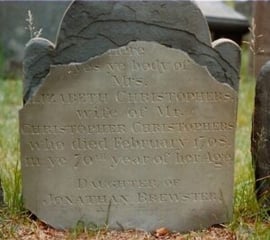
Continue reading →An occasional series in The American Genealogist (TAG) is called “Enigmas,” which often concern clues or possible kinships that are not entirely proven, with varying levels of uncertainty. A recent comment on my post about Christopher Christophers recalled me to one..
Continue reading →Okay, so despite my earlier claims, I did end up looking at the 1950 census on day one. Of my twelve living ancestors, I found seven immediately upon searching, and another two after browsing their specific town of residence; I was unsuccessful in locating the..
Continue reading →My colleague Chris Child wrote a controversial post last month about the merits of the 1950 Census. The title of the post was triggering, but I must admit that I agree with his overall argument. According to Chris, “…the census has spoiled us. Because it is often so..
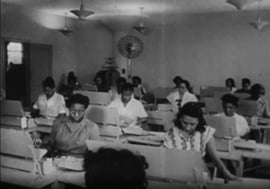
Continue reading →The 1950 Census was released right on time, exactly 72 years after 142,000 enumerators set out to record the booming post-war population of the United States. Today, in 2022, we will be able to search for the names of our..
Continue reading →While the 1950 census was still in its planning stages, a primary concern of the United States Census Bureau was minimizing cost. Executing the 1940 Census had cost the federal government $67.5 million.[1] Not only had the U.S. population increased by 14% between 1940..
Continue reading →Okay, I know the title of this post is not going to be popular amongst many of our readers. My original title contained at least one curse word! It’s not that I do not care about the 1950 census, it’s more of an overall appreciation of how many more..
Continue reading →