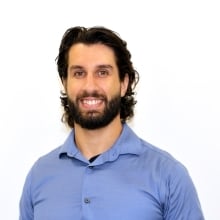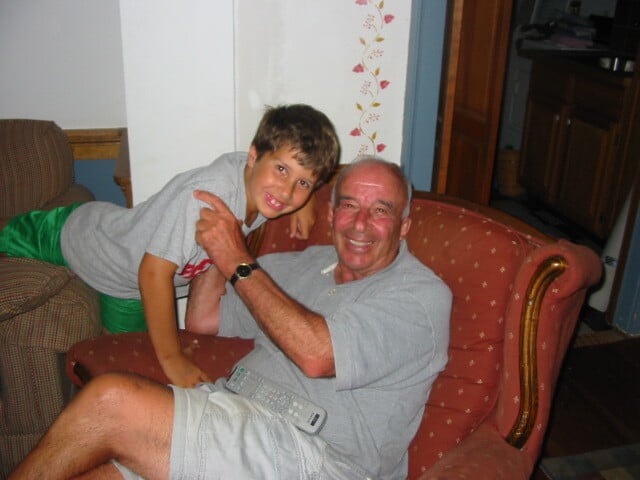
My Papou and I (photo is property of the author)
My Papou (grandfather in Greek) was Nelson James Sarris. His true name was Nikolaos Fotaki Sarris, though that will become relevant to our story later. Nelson was my mother’s father, and it was he, along with my great-uncle Nicholas Sarris, whose passionate and naturally Greco-centric promotion of historical study centered Greek heritage in our family conversation. It also inspired my own heartfelt love of classical learning and literature, which then spurred a general affection for history and eventually genealogical research. My single regret from these days is that neither Nelson nor Nicholas could see the places these studies would take me, though I am grateful to have gotten to see Greece with my Papou one precious time.
Although, if I can claim one further regret, I wish I was more earnestly prepared for the perils of Greek genealogical study. This side of my family comes from the island of Lesvos and I knew much about them growing up, yet mapping the Sarris tree and its related branches has been the most difficult branch of family research I’ve experienced presently. Volumes of personal family knowledge and selective documentation took me far, but vicious late-19th century roadblocks stemming from record loss, disorganization, and past regional conflicts created a need to write the local government archives for information much sooner than I anticipated.
I mailed letters to several locations, translating them to Greek each time, and received a few helpful responses. Then, one morning, I received a phone call with an international number.
“Hello?”
“Yes, are you David Shaw?” a woman responded in a thick accent.
“Yes,” I answered, “Who is this?”
“I am Olga Anagnostou. I am your cousin! Modesto’s granddaughter!”
Naturally, the shock was immediate. I knew of Modesto from my work; he was the son of Nikolas George Sarris, the eldest Greek family member whose birth I can confirm, and brother to my great-grandfather Demetrios “James” Sarris, yet I knew little of him beyond that. Olga continued, saying a friend at the archives had contacted her upon receiving my letter. She then invited me, in that moment, to visit her that summer and stay with her in our ancestral village of Napi and meet more of our shared family.
It was certainly an unusual suggestion, but after a few more chances to write and speak together I hardly saw how I could refuse. Not only was this a chance to research my most central family line with more direct methods and resources than I had ever been able to exercise, but also to open a new frontier and bridge a gap in our family connections which had lingered for generations. The window to visit was a mere six days, so I prepared my notes, questions, and marked every archive and record repository I planned to visit. Then, the day after my brother’s wedding, I boarded a plane and readied myself for one of the most significant introductions I may ever make.
Olga and her sister Maria met me at the airport, where we then proceeded to Napi, an ancient stone village of a mere 130 residents at its seasonal peak. It would soon appear I was related to nearly half of them, and the drive reminded me of the unbridled beauty of the place, 13 years since my last visit. Rolling hills sat adorned with rows of olive trees which enveloped their service and stretched fully down towards the Aegean. The village itself bore the hallmarks of traditional Greek architecture with white buildings lining the narrow streets and their wild changes in elevation. Working equipment set about highlighted the village’s agrarian nature, a fact which illuminated an ongoing struggle for the already remote island, that of disease spreading among their cattle and causing bitter food shortages and living struggles for those involved with their upkeep. The severity of the matter has reached a point where members of the community have asked me to relay that any help that can possibly be sent to the island is dearly appreciated.
Olga’s house was one of three adjacent homes which had been passed down through our family lines for generations and now belonged to her and her siblings. Olga and Maria led me into her courtyard to meet their brother Stratios and his wife, Sophia. Each of them bore the surname Hadjipanayotis, another name prominent in my Greek family line. Before I could protest, I was seated at their table as they prepared an array of fruit, fish, bread, and cheese. We shared introductions even through the barriers of language, as several of Olga’s relations spoke no English and I very little Greek. Yet, every relative present, and those whom I would later meet, offered such cheer and eagerness to share stories of our two worlds that such things hardly appeared as an issue. Olga led me to a space she had prepared in her guest house and took every pain to ensure I felt comfortable and content. I was also introduced to Haralambus, or “Haris,” son of Athena, another of Olga’s sisters, who would become a constant companion through my travels, as well as a valued friend. Finally, the family also made very kind offers to take me around the island, and showed me various beaches, towns, and monasteries which highlighted the dense beauty of Greek Orthodox art.
At this point, my research plans warranted adjustments due to the hindrance, though one I was happy to suffer, of the overwhelming kindness, warmth, and generosity I experienced from each person in our village. I have been fortunate to have many wonderful travel experiences, but to borrow perhaps too much from my elder relatives, there is truly no other place like Greece, and no other people like the Greeks. Of course, the mission to visit the registries and archives remained in-tact; my departure was fast approaching, after all. Yet, what is the point of genealogy if not to bring us closer to those we are connected to? Therefore, how could I abandon this chance to enjoy time with those who share such crucial pieces of that heritage, and who had been so courteous in inviting me to stay with them? So, a day went by, then another, and little work was done. I met more relatives, like Olga’s daughter Ariadne, her family, and an elder cousin named Panayotis, among others, and saw too many incredible things to possibly relate here. I would never have traded those days for the additional research time, but I still had a mission to complete.
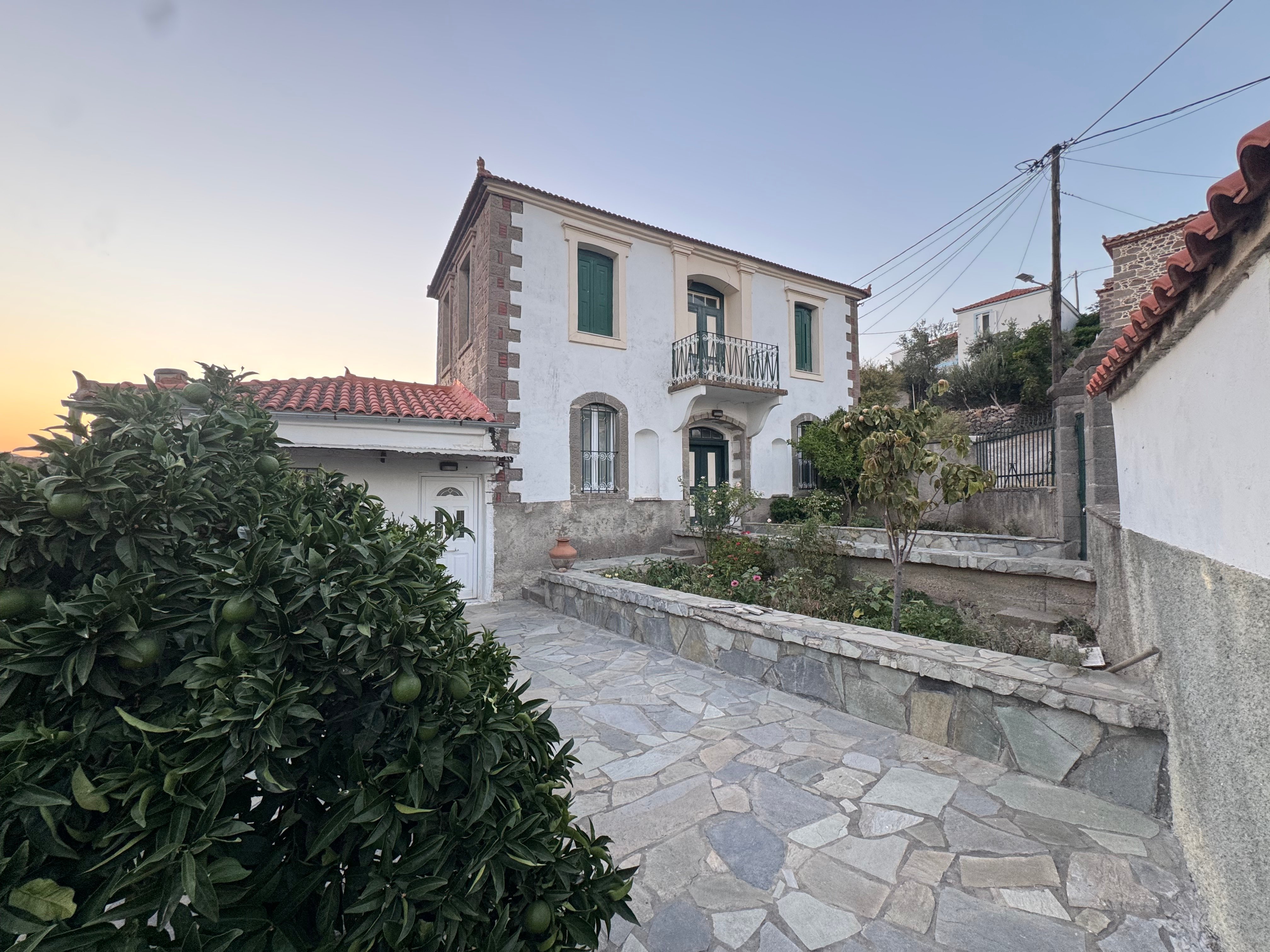
Photo is property of the author
Haris helpfully informed me that the church records which online resources had pointed me towards likely wouldn’t have the information I desired, and the surviving gravesites would only hold relatives I already knew. While I considered the needed strategic shifts, he and Athena offered me something arguably far superior, the chance to enter the home from which the family I know first sprung. Indeed, next to Olga’s house was the one where my great-grandfather Demetrios and each of his siblings were born. The old place still appeared a model of early 20th century Greek living, with beautiful wood furniture and pieces of historic and religious imagery. Then, from off the walls of the house and that of Athena next door, Haris retrieved photos of Modesto, Demetrios and his wife Evanthia, another brother Efstratios and his wife Parthenope (whose descendants I was already close with), their sisters, father and mother, and other relatives and long-deceased family members whose faces I once thought I’d never see. Later, Olga and I sat in her courtyard where she showed me further photos and drew out a chart of her entire family tree as she knew it.
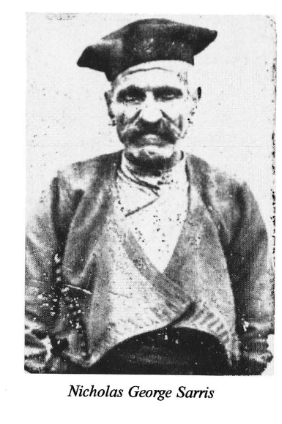
Photo from My Ninety-Five-Year Journey by Charles N. Sarris, my great-granduncle.
I felt an immense thrill, not only because my research finally made its breakthroughs, but also due to the recognition of how special it was to look upon the face of my second-great-grandfather in the very home where he raised the family that would one day create mine. By now, there were only two days left to do my work, and I still was yet to visit the towns where the most crucial records were kept. Notably too, I do not drive, and the village is absent of transit infrastructure or any taxi info that I could find. My relatives’ schedules were filling up with their own visits with each other, and a looming sense was growing that I may need to get creative to make this mission succeed. This was partially correct, but so much more would prove impossible to predict, and ensuing days would be filled with desperate gambits, betrayals, and even a bit of hitchhiking, still in the hopes of uniting a family across the world.
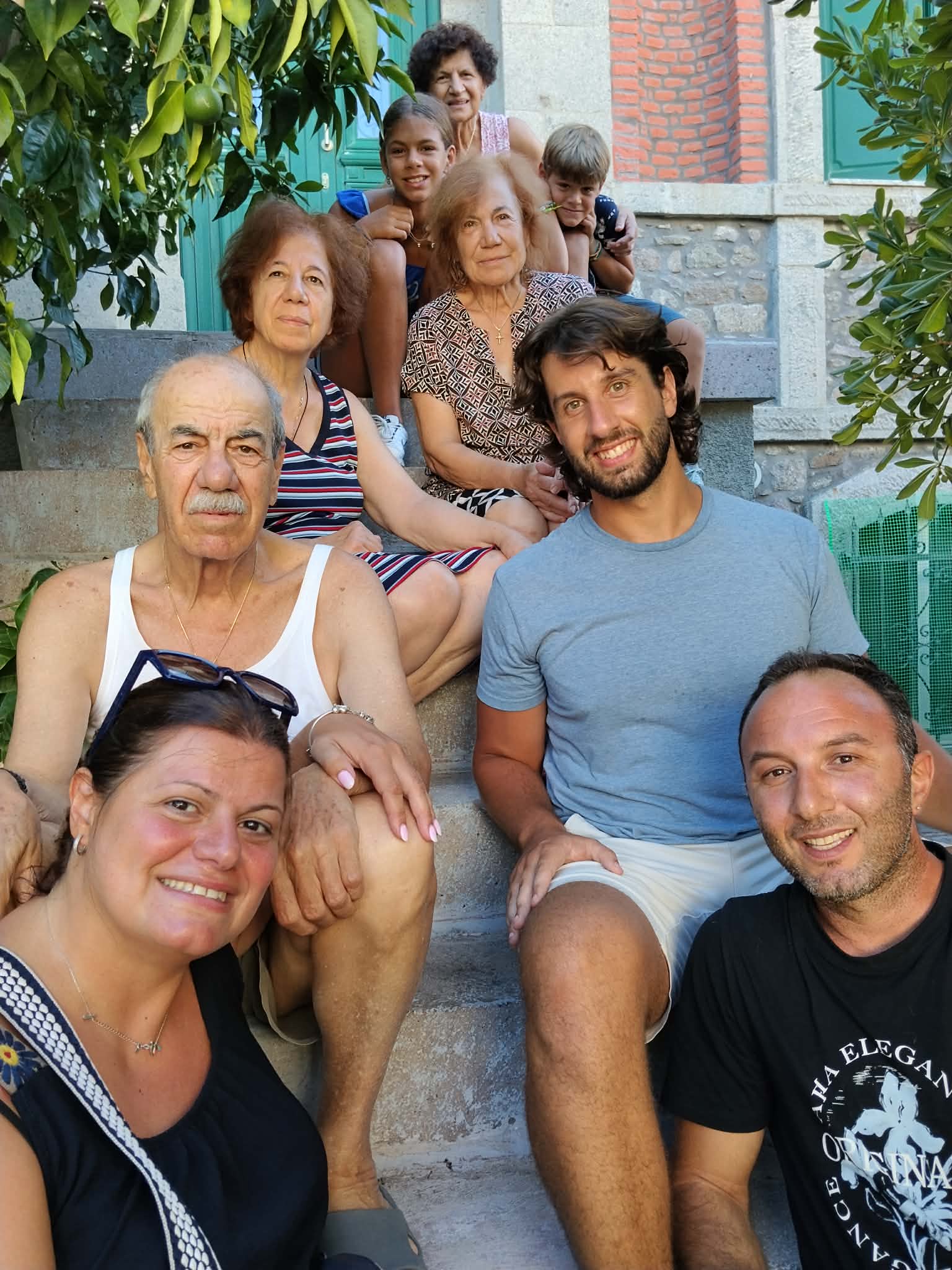
Photo is property of the author