Recently, Lonnie G. Bunch III announced that he will retire from his position as Secretary of the Smithsonian at the end of this year. Dr. Bunch dedicated his career to the study of our collective history as a nation and inspired students and the public to explore the past in meaningful ways. As the founding director of the National Museum of African American History and Culture, Bunch confronted hard truths of the past and sought to tell the nation’s history through the journey of one people’s experiences. The museum received near universal acclaim when it opened ten years ago. Dr. Bunch then became the first historian and the first African American to be appointed the 14th Secretary of the Smithsonian in 2019. His career is an inspirational one.
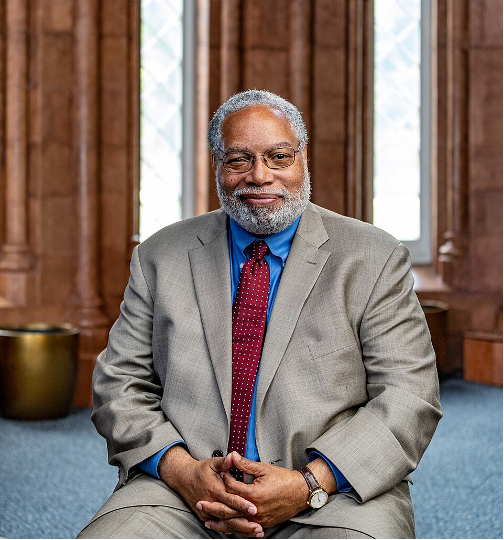
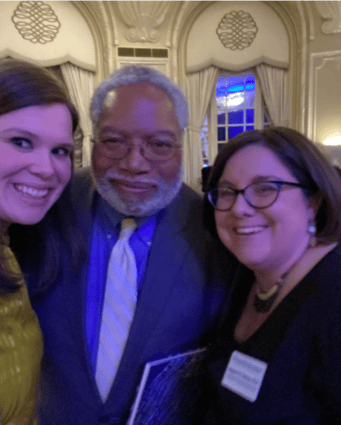
In 2023 I had the honor of researching and writing his family history to present to him, alongside the American Ancestors Lifetime Achievement Award, at our Annual Family History Benefit Gala. During the process of researching his ancestors, I quickly realized the importance they placed on education.
Dr. Bunch is not the first educator in his family—both of his parents were public school teachers. His father, Lonnie Bunch II, was a science and chemistry teacher, and his mother, Montrose (Boone) Bunch, taught third grade. Both were graduates of Shaw University, one of the oldest Historically Black Colleges and Universities in the South.1 His parents achieved this with the support of their parents and grandparents, who encouraged the pursuit of higher education. The value of education and the opportunities it could afford was prioritized on both sides of Dr. Bunch’s family immediately following emancipation and in the decades that followed.
 Dr. Bunch’s paternal grandfather, Lonnie Griffin Bunch, was born on a farm in Wake County, North Carolina, but was determined not to work on the land for his entire life. Picking cotton by day and attending classes by night, he managed to graduate from Shaw University in Raleigh, North Carolina, with a Bachelor of Arts degree in 1910.2 Dr. Bunch recalled, “He [his grandfather] wanted to go to the dental school at Howard University, but he couldn't afford to pay an entire year's tuition upfront. So, he moved to Atlantic City and pushed tourists in jitneys up and down the boardwalk, while his wife, Leanna, worked at a hotel.”3 After raising enough money, Lonnie attended Howard University’s Dental College in Washington, DC, where he earned a doctor of dental surgery degree in 1916.4 His dedication to earning a higher degree opened doors for his children as well. His career in dentistry allowed for financial stability to raise his family in the suburbs of Newark, New Jersey, and ensure that the next generation had even greater educational opportunities.
Further back in his line, Dr. Bunch had champions of education fighting to ensure Black people could receive an education in the Jim Crow South. On his maternal side, his great-grandfather, Jesse Anderson, served on the School Committee for Woodland No. 1 school in Northampton County, North Carolina, in 1899.5 This was a dangerous position to take as white supremacists were actively fighting against the education of Black students there. Just months prior to his appointment, white supremacists had attacked Black-owned businesses and people in Wilmington, North Carolina, and the sentiment of white supremacy in the state was on the rise. Dr. Bunch reflected on this discovery about his ancestor’s work on an episode of Finding Your Roots with Henry Louis Gates, Jr. Dr. Bunch marveled at his great grandfather Jesse’s courage in taking on a role that would put their family at risk. Jesse Anderson knew the dangers but certainly felt deeply enough about the importance of education to make that sacrifice for the good of his children and his community.
This is the legacy that Dr. Bunch carried forward in his own career. He has worked tirelessly to ensure all Americans could see themselves reflected in our national museums. We all have benefited from his drive to protect our nation’s history and public access to information, even when that has proved challenging. Perhaps it is the strength of his ancestors’ resolve to obtain and protect a right to education that began a legacy of educators. Whatever has served as his motivation, we have all benefited from it. I know that I can speak for myself—and American Ancestors more broadly—in offering appreciation to Dr. Bunch for a lifetime of good works and congratulations for whatever may come next.
Sources
[1] Jacueline Trescott, “Personal History,” The Washington Post, 17 October 2005, https://www.washingtonpost.com/archive/lifestyle/2005/10/17/personal-history/bf759628-06a0-4605-9846-f3cd271a9c7e/; Shaw University 2011-2012 President's Report (Shaw University, 2013), 19.
[2] “Shaw University Commencement,” The News and Observer (Raleigh, North Carolina), 13 May 1910, p. 3, https://www.newspapers.com/clip/114299318/lonnie-bunch-graduates-shaw-university/.
[3] Trescott, “Personal History.”
[4] 1916-17: Catalog of the Officers and Students of Howard University, Vol. XI, No. 4 (Howard University, 1916), 225, https://dh.howard.edu/hucatalogs/44.
[5] “School Trustees Meet,” Roanoke-Chowan Times (Thursday, August 3, 1899), p. 4.