When thinking about genealogy, I believe that our homes can sometimes be an overlooked or undervalued resource. Research documents families and the history of a particular place and space. One home can have dozens of owners, but if your family is one of them, then it is intertwined with the property, making you a part of its history. It’s a different way of thinking about history and genealogy — rather than making your family the center of the research, we think about the part that our family played in a certain place or community. It can also deepen the connections that we have to the places that we live in. In this “melting pot” of the United States, we can’t always visit our ancestral lands, which can create a disconnect in our heritage. However, researching our properties and the history of the places that we live can help to ease that tension, strengthen our heritage, and maybe even create empathy for the people that were here before us.
With a more specific view on architecture, Dell Upton of the University of California at Berkeley said that the study of buildings and architecture are important to what he calls “American Vernacular Architecture.” Architects and historians typically turn to buildings as a reminder of history and the style they embody. Researching specific places and buildings helps to create a broader definition of architecture in a particular region. The use of buildings changes over time and that speaks of cultural and social changes as well. If more research were to be done in the area of architecture, a more defined image of American life could possibly emerge.1 Throughout my research I find this to be true, for I learned much not only about my town, but also the lives of ordinary citizens and how that changed over time reflected in the use of these properties.
When I bought my first home, I went down a rabbit hole of town history trying to determine when my home was built and by whom. Long story short, it was a complicated history, as the land that the house stood on went back and forth between two towns. In the end, however, I figured out that the home was built at least 150 years ago and underwent several major renovations. It was originally built by a local businessman whose products are what the town is ultimately known for. All research was completed using deed, probate, and town records. You can research the history of your home as well this way, which is a wonderful way of putting off that laundry pile and getting lost in history!
Back when I was in college, my family purchased a new (to us) home. Without revealing the town name, I will just say that it is an old New England town founded in 1668. When purchased, the real estate agent gave us a black and white photo of the home that revealed a barn that is no longer standing. That photo is below and is seemingly from the 1940’s, based on the car parked in the driveway:
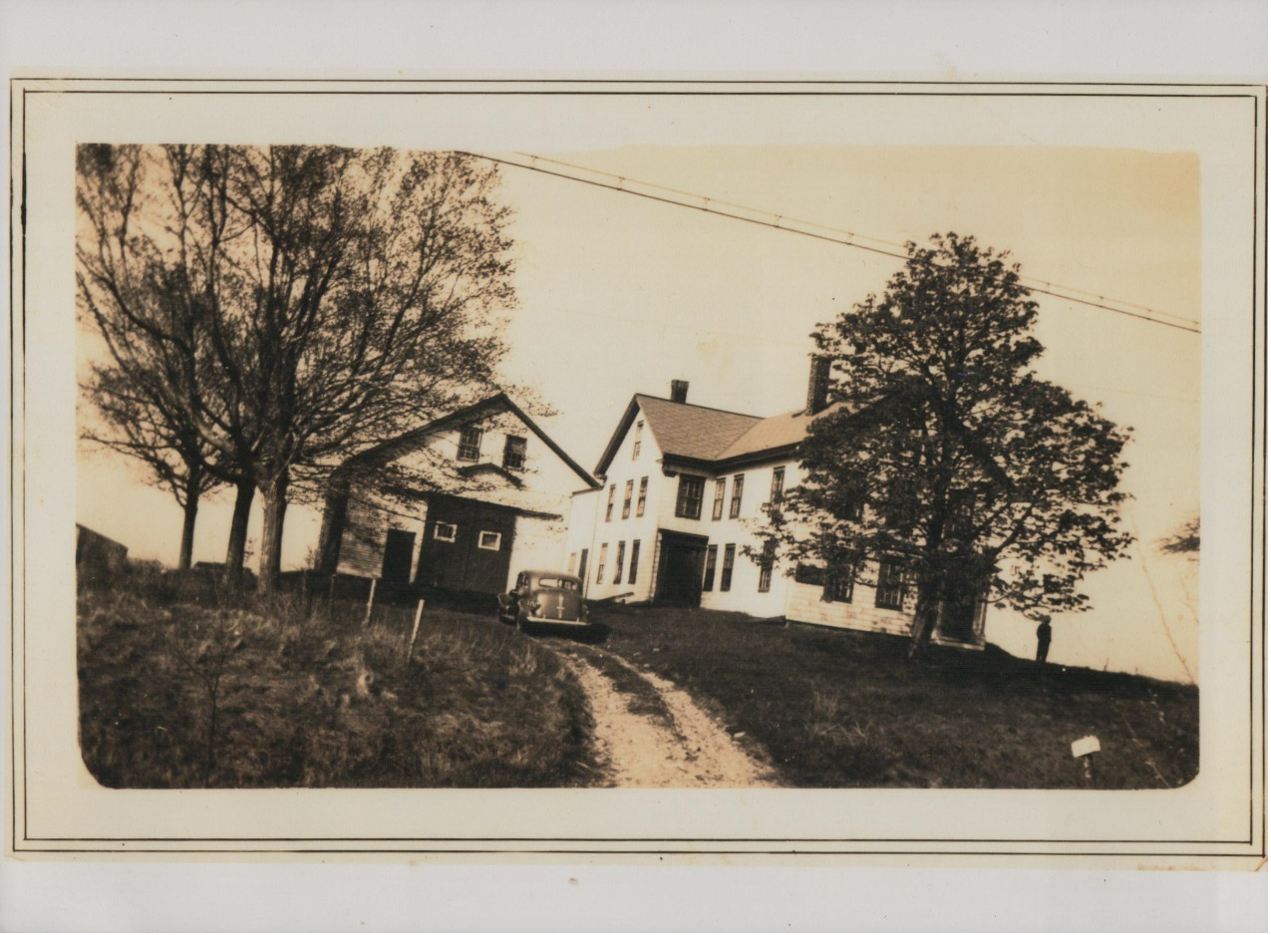
The house itself was inhabited by an elderly couple prior to my family purchasing it, and as a result was not in perfect condition. Once kitchen renovations started, we discovered an old brick chimney and oven that had been walled over! This piqued my interest into learning more about the house. I discovered that the land the house is on was originally owned by a large farming family, for which there is still a town park named after them on their original property very close by. By using a combination of town records, maps, and deeds, I ascertained that the central house was built between 1799 and 1817. The oldest deed was from 1799 for the land, and an 1817 deed recorded the transfer of land plus a “central dwelling house and a barn.” Deed records typically record the previous deed, so following these deeds is typically a fairly easy task by following the numbers back in the books. Through this, I identified the other owners of the property, how its use changed over time, how it was ultimately subdivided. I even had a name to apply to the photograph above. In 1937, an individual named Henry Small purchased the property, so in all likeliness, this is his family’s car in the photograph above (and maybe even him standing off to the right!).
Making these discoveries about the house really helped our family to connect to the land and understand the house a bit more. Because of its age, we knew what to expect and what we might find when walls were repaired. We began to look at walls and layouts differently. For example, in an old house, you would expect a fireplace of some sort. We looked for clues as to where that may have been. Try this in your own home! Is a wall rough looking? Are there different materials used on different walls? These are all clues that the house has been altered, and it is fascinating detective work for old New England homes! From the photograph above, we knew that approximate locate of a fireplace based on the chimney placement.
Another house that held particular interest to me is the former residence that my family started a business in. It was originally a private home, then it was used as the cafeteria for a large mill across the street, before it transferred to my grandparents in the mid-20th century and they converted it into a food manufacturing facility. Below is a photo of my mother holding her doll in front of that building, and a front facing photo of the building:
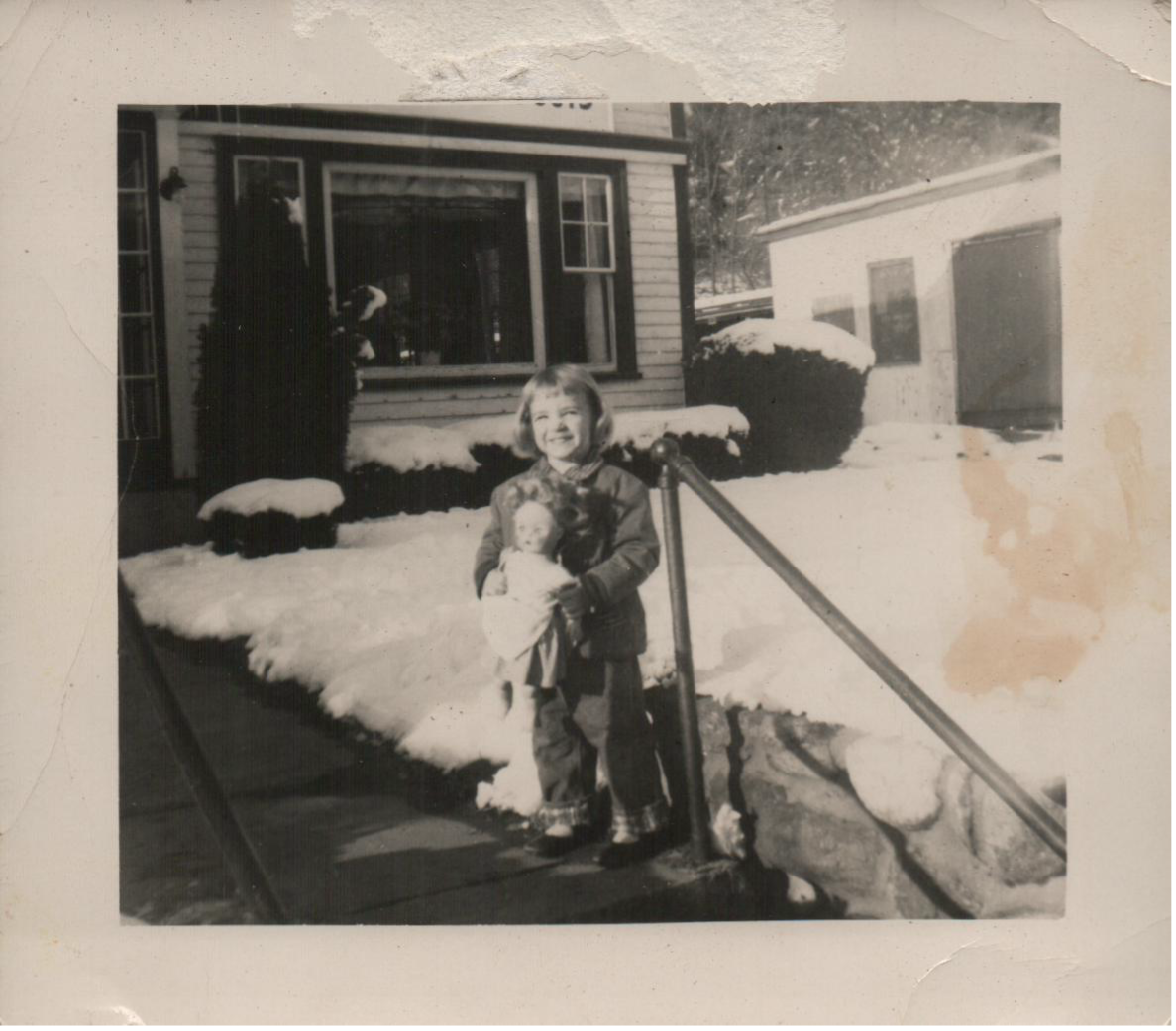
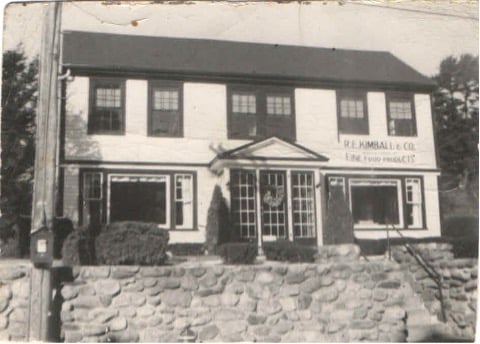
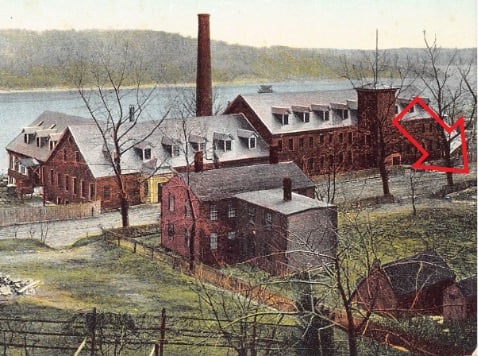
In comparison, below is an old postcard showing the mill building across the street. Although the buildings that my family bought are not shown on this postcard, I added an arrow where my mother is standing in this photo:
Our family made sure that the building kept its charm, and we never replaced the wooden floors in the original part of the home. My grandparents, even though they added expansions to parts of the building, did not replace those large front windows above. They created an addition and then moved the windows in their exact size and location closer to the street so that the building retained its look. This is another aspect of buildings to consider when doing house research. Buildings are not always used for their intended purpose indefinitely. Some have been transformed and have not retained the look of their original structures, while others have. They also may have been removed or demolished, and a more modern home or building now stands in its place. There are any number of possibilities when searching deed records for information about a particular property, and it is important to keep your mind open to them!
If your family was originally from, say, Ireland or England, and now as descendants you live in Massachusetts, there is a limited amount of connection that can be felt to the physical land unless you travel to these ancestral places, which not all of us can do, or even identify. Many of us in the United States have a hard time physically connecting to our ancestral lands since the land that we live on, for the most part, once belonged to someone else (I am referencing Indigenous lands for the purpose of this argument). Revealing the history of the places, towns, and homes that you currently live in can ultimately help with that disconnect and build a stronger bond with the land that you live on and its static buildings. It may even help to create respect and understanding for those who came before us on these lands. So, the next time that you are looking at old family photographs, take a look at the buildings and homes that are also in those photographs, because they also have meaning to your family!

Sources
1. Upton, Dell. “The Power of Things: Recent Studies in American Vernacular Architecture.” American Quarterly, 35, 3, (1983). 262-279.