I was raised on peanut butter and elderberry jelly sandwiches. My amazing paternal grandmother, Mary (Kler) Heisinger (who I called “Momma”), made the jelly every year from wild berries at our family home in the Catskill Mountains that my family affectionately calls “The Farm.” She has been gone five years now and I have missed the taste of her jelly for far too long. So, this year I set out to gather her recipe and make my first attempt at recreating a flavor I associate with her.
Luckily, my aunt still had Momma's handwritten recipe on tan index card. Unfortunately, they read more like quantity notes instead of a full recipe. Because she knew the process inside and out, she must have not seen the need to write down instructions. With the help of the internet, I was able to determine how we would need to clean and cook the berries to ensure they were not toxic to eat (elderberries should not be eaten raw). I followed the internet’s instructions, but Momma’s measurements – which called for WAY more sugar than any of the recipes online. That must have been her secret.
Upon our visit to the Farm in August, I announced my idea of making the jelly to my parents. I must have piqued my dad’s interest because the next day he took my kids for a tractor ride and came back with a bunch of berries in his hand, proclaiming that they were the perfect ripeness for picking. The stars aligned and my trip was perfectly timed for the harvest.
 As my dad and I got to work harvesting berries, I thought back to the last time time I helped Momma harvest from the same bush years earlier. That morning she had walked through the kitchen with a step ladder in her hands determined to go down and pick berries on her own. At 86 years old, there was no way I was going to allow her on that venture without me and promptly put on my hiking boots to assist her. As I climbed the ladder, Momma stood beneath me giving directions in an irritated “just let me do it myself” kind of way. Fiercely independent to the end, it was hard for her to accept help, but I must believe in the end we were both glad to have shared that experience together.
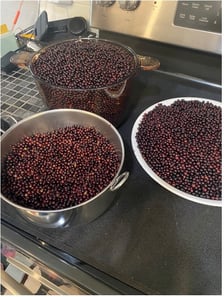
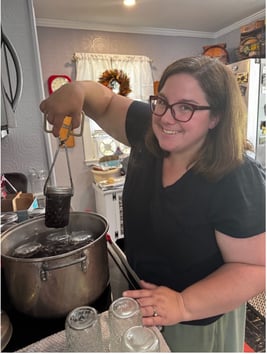
After my dad and I were done battling nettles to get the berries, we began the tedious task of separating the berries from the stems. I think everyone in the house helped with that job over the course of the day (I have since found some tricks online that I will be trying next year). Once the berries were washed and ready, I got to work making the jelly. The smell in the kitchen made me feel Momma’s presence. To top off the experience, since I was making this in a home that has been in my father’s family for generations, I was using the measuring cups, pots, bowls, and utensils that had been used by generations of women in my family. It was wonderful feeling so close to them all and to feel like I was carrying forward a family tradition that was almost lost. 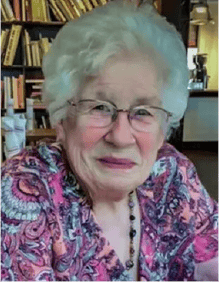
It was a lot of work on a hot August day, but the results were so worth it. The entire experience made me feel connected to my foremothers and I am now able to share a food with my children that was something special I associate with my Momma. I made 17 jars and was able to distribute them to family and friends that also miss her and her jelly. I hope to continue the tradition each year and perfect my technique – keeping a bit of Elderberry Mary alive through her recipe.