Steven Weyand Folkers’ comment on a recent post – regarding a father and son both marrying women surnamed Miller, but from unrelated families – reminded me of a..
Continue readingWe are all familiar with the on-line address databases that pretend to list “relatives,” which often are no more than similar names picked up by the databases’ algorithms. My own listing, for example, includes none of my real relatives and instead links me to strangers..
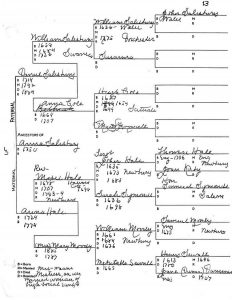
Continue reading →Following up on correcting the charts in my Seeing double blog post, the chart showing my ancestor Anna (Salisbury) Slade was a recent disappointment and involved removing some ancestors from my charts. The chart identified Anna’s parents as Daniel Salisbury and Anna..
Continue reading →As one would imagine from the title, Roger Thompson’s most popular work (see my last post) is Sex in Middlesex, Popular Mores in a Massachusetts County, 1649-1699.[1] First, a few words on the differences between academic historians and genealogists. Academic..
Continue reading →Adoption records can be one of the most frustrating aspects of genealogical research. Still somewhat taboo in nature, the information they contain can be invaluable. These types of records are usually preceded..
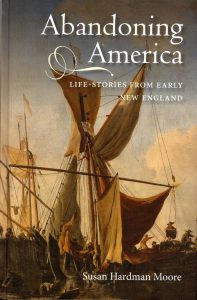
Continue reading →The Great Migration to New England from 1620 through 1640 is the focal point of the Great Migration Study Project by Robert Charles Anderson that NEHGS has been publishing for more than twenty years, but there are also a number of lesser-known academic studies of..
Continue reading →More often than not our work in genealogy and family history leads us to more than one proverbial brick wall. No matter how hard we try, or with what tenacity we might pursue that much needed..
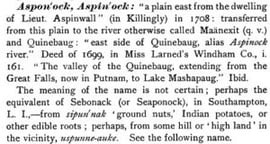
Continue reading →A friend from my hometown of Putnam, Connecticut posed a question on Facebook about what the word “Aspinock” literally means. Putnam was incorporated in 1855; in earlier years it had been known as Aspinock, but it was later named Putnam after General Israel Putnam of..
Continue reading →Sir Richard Saltonstall came to New England with the Winthrop Fleet in 1630. He left in 1631. His oldest son, Richard Saltonstall, also returned to England in 1631, where he got married in 1633 and then brought his wife and their nine-month-old daughter back to New..
Continue reading →In attempting to prove Revolutionary War service for a man from Norwich, Connecticut, who did not show up in any militia lists,..
Continue reading →