Now, it's time to write

[Editor’s Note: Between June and August of this year, Alicia wrote two series on her research and writing methodologies. In the interest of bringing them together, and sharing them with a fresh audience, they are offered again, with some of the author’s commentary. The..

Continue reading →
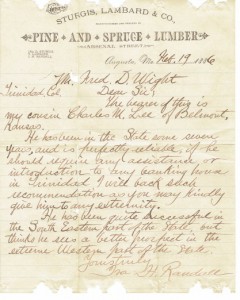
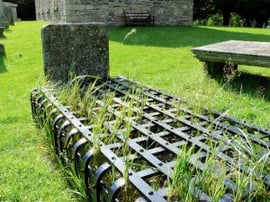
The horse he rode in on

Click on images to expand them.

Every family history researcher hopes diligence and persistence will bring forth enough details of an ancestor’s life to fill out a void on the family tree. There is always hope that serendipity will produce unexpected history gold in..

Continue reading →

Unintended consequences

After the turn of the nineteenth century, the number of medical schools around the world increased significantly. While the increase in these institutions led to monumental developments in the medical field, it also had previously unforeseen consequences. One such..

Continue reading →

Update on the Early New England Families project

Six new sketches have been posted in the Early New England Families Study Project database:[1]

John Dunham (c. 1615–1692), son of John Dunham (GM); married Mary ___; settled in Plymouth; farmer; 7 children.

Richard Newton (c. 1606–1701) married Ann/Hannah Loker alias..

Continue reading →

"There was an eastern prince"

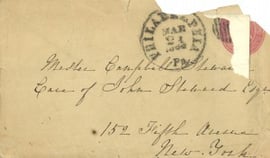
As it turns out, the envelope in which my great-great-grandmother’s letter to her son was mailed in 1864 (and found in my grandfather’s box of family papers) also contains a story written by my great-grandfather and dated 1 November 1862. His own interpolations are..

Continue reading →

A genealogist's research process

[Editor’s Note: Between June and August of this year, Alicia wrote two series on her research and writing methodologies. In the interest of bringing them together, and sharing them with a fresh audience, they are offered again, with some of the author’s commentary.]

..

Continue reading →

Writing family history from A to Z

When writing your family history, it's important to decide what to omit. This almost sounds like perverse advice, doesn’t it? And yet, when I read a recent New Yorker article on that topic by John McPhee,[1] I realized that omission is an essential part of the process..

Continue reading →

For want of a key

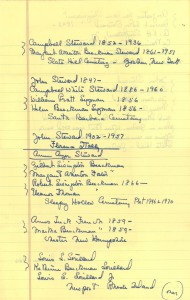
Notes by Margaret Steward, June 1966, p. 1

I would venture to say that many of us got our start in genealogical research with the kind of handwritten notes on cemeteries I found in my grandfather’s box of family papers. My great-aunt Margaret Steward (1888–1975) was..

Continue reading →

Finding a better life

Susan (Duross) McKenna, daughter of Terence Duross.

It is said time and time again that our immigrant ancestors came to America for a better life. What I often find in my research is that once they made the journey, they were met with hardship and heartache.

In..

Continue reading →

Harry Potter? Harry Leech!

To a genealogist who is also a huge Harry Potter fan, the recent news from J.K. Rowling has been very exciting. According to a short story posted to her website, the origin of the Potter surname has deep roots in twelfth-century England. According to Jo, Linfred of..

Continue reading →