In days of yore, when I was in college, locating published articles on historical topics required hours sifting through library stacks and individual journal indexes, then laboriously photocopying each page of each article. Thankfully, in today’s digital world, we have
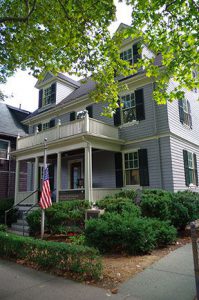
Continue readingOne hundred years ago today, on 29 May 1917, Rose Kennedy gave birth to the future president of the United States, John Fitzgerald Kennedy, in a charming three-story Colonial on a lovely street in Brookline, Massachusetts. That same..
Continue reading →May is Jewish Heritage Month, so in its honor I decided to look into my own Jewish heritage.
Even though I work at a genealogical society, I always felt that it was a worthless pursuit to try to trace..
Continue reading →Earlier this month I went to the National Genealogical Society conference in Raleigh, North Carolina; it was my first time in the Tar Heel State. While I have many southern ancestors who started out in Virginia and Maryland before heading..
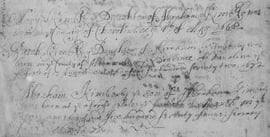
Continue reading →I have just received the last volume in Jeremy Dupertuis Bangs’ Plymouth Colony town records series – see my earlier post on the records of Sandwich and Eastham. The Town Records of Duxbury, Bridgewater, and Dartmouth during the Time of Plymouth Colony, 1620–1692, like..
Continue reading →Shortly after I began work at NEHGS about ten years ago, we went into all-hands-on-deck mode. The occasion was the National Genealogical Society’s annual conference, which was in Boston that year and bringing many visitors to the building. A newbie, I was assigned the..
Continue reading →Hints for Success
I recently saw an interesting infographic about writing success. Although the focus is on writing novels, several of the hints apply to writing a family history:
- read more
- write, write, write
- read your work aloud
Let’s look at each one of these in..
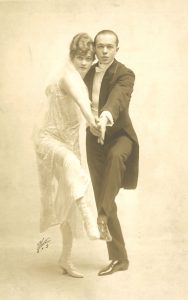
Continue reading →I recently bought a striking pair of photographs by White Studio of New York. The first was sold as showing an attractive couple dancing, but when I received it I could see that one partner was identified: Mrs. E. B...
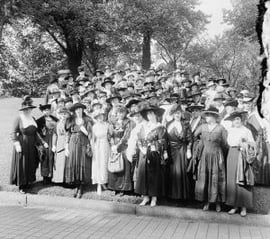
Continue reading →Between 2 March 1907 and 22 September 1922, the Expatriation Act of 1907 required a woman who married a foreigner to take the nationality of her husband, and therefore she lost her own citizenship. The Cable Act (also known as the..
Continue reading →