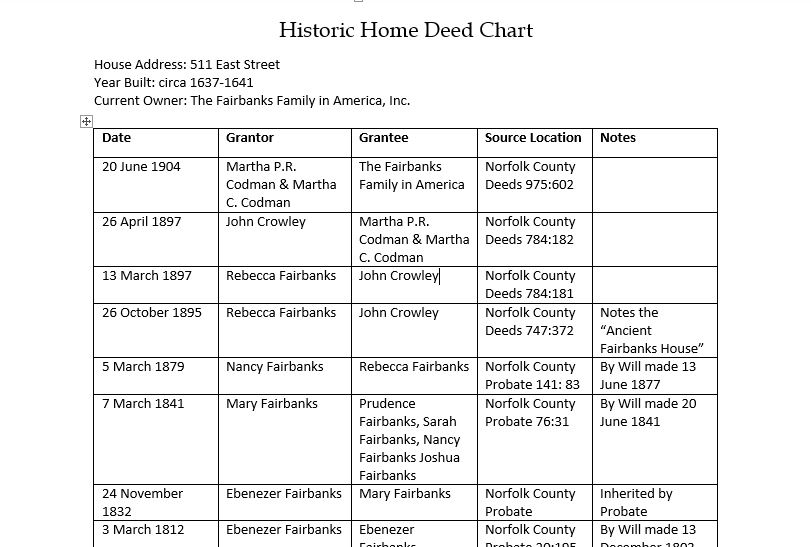
 In preparing a lecture on house histories, I was reminded of the importance of chaining deeds – that is, linking the deeds for your house together using a deed chart – as the first step in researching the history of your home. Deeds are the primary source when conducting research on a building or property. While the deeds can only tell you who owned a house and not necessarily who lived in it at any given time, the transfer of the property from one owner to the next forms the structure of your research and can provide clues for where to look for more information.
When I research a house, building, or a specific plot of land, I always like to create a deed chart as a way to chain the deeds together. Historian Marian Pierre-Louis has created some nice examples of deed charts that you can download from her blogpost, Using a Deed Chart to Trace your Deeds. The chart starts with the most recent transfer of the property to the current owners and works backward in time. If you are researching your own home, it would start with your current deed, with you as the Grantee (buyer) and the previous owner as the Grantor (seller).
Keep in mind that deeds are not for the house itself, but for the land.
From there you can continue working backward. You know that the previous owner was at one time the grantee, so you can search the county indexes for that name as a grantee to find the next deed. Many regions have more modern deeds available online on their registry of deeds websites, though sometimes you may have to make a visit in person. You can continue to work backward in this manner to the earliest deed you can find.
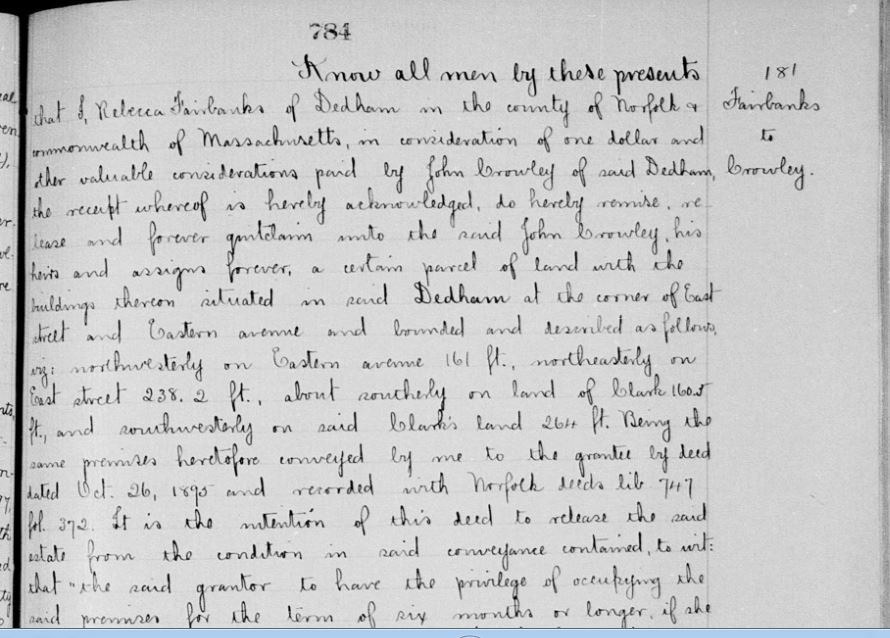 Keep in mind that deeds are not for the house itself, but for the land. The earliest deed you can locate does not date the house as such, but it will reveal how long the property has been owned in a legal sense by an individual. You will likely need to rely on architectural and other clues to help date the house. Having all the deeds in place will help you determine which owner built the house based on its age.
Probate records are also more likely to include a description of the actual structure...
If there are gaps in your chain, check probate records. Often houses and property are left to heirs in probate rather than through a deed. You can still document this in your chart with a note that the property was transferred via probate rather than by deed. Probate records are also more likely to include a description of the actual structure rather than just the land, and the inventories included often can give you a sense of what was in the house at that date.
The reason I suggest starting a deed chain is because a deed chart forms the structure that will inform the rest of your research. Once created, it is a handy at-a-glance reference to have with you while you research. When you are digging through records and find a dated photograph of your house, having the deed chart with you will easily allow you to identify the owner of the house at the time the picture was taken. Once complete, a deed chart creates a nice timeline for the property that displays its history in its own right. You then have names and dates that can lead to further research opportunities to help you build the story of your home.