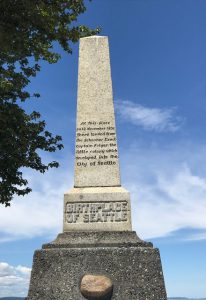
This past June, I was excited to attend the first workshop ever offered by NEHGS in Seattle. It was a bit of a drive from my home in Salem, Oregon, but definitely worth it, and the most useful thing..
Continue readingA few years ago, I was having dinner with some friends when I learned that one of them did not know what microfilm was. This conversation then turned to talking about why only some of us had heard of and used microfilm and others had never heard of it. As a new..
Continue reading →By now followers of my Vita Brevis posts are well aware that no genealogy is perfect. Period. No matter who wrote it.
The old mindset that a work published in a book or an article is automatically complete and completely accurate should be dead by now. The problem has..
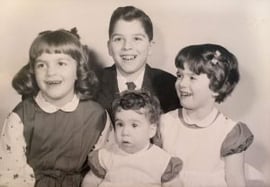
Continue reading →Each year, on the first Sunday in August, we celebrate National Sisters Day. Growing up together, we often take our sisters for granted. The older we become, the more we tend to cherish our shared experiences and the more we realize that..
Continue reading →[Editor's note: This blog post originally appeared in Vita Brevis on 8 March 2016.]
When researching a family, one can quickly become focused on names, birthdates, and death dates. It is easy to get caught up on going as far back..
Continue reading →“Some secrets never leave us alone…” – Diane Capri
In my father’s house, there was a subject we were forbidden to speak of. This was the subject of my grandmother’s adoption and her biological mother.[i] Under pain of reprisal, we were told..
Continue reading →I did not learn to spell properly until I learned to type at the Katharine Gibbs School. This may have had something to do with my less-than-perfect handwriting. Seeing a word in type instead of scribble helps me spot the errors.
In genealogy, of course, we run into..
Continue reading →“Our dead are never dead to us, until we have forgotten them.” – George Eliot
My love of family history came from my grandmother. Growing up, I recall asking a lot of genealogical questions that most of my family couldn’t even begin to answer – except, of course, for..
Continue reading →[Editor's note: This blog post originally appeared in Vita Brevis on 2 February 2016.]
From tracing free people of color in New England to identifying former slaves in the deep south, NEHGS can help you tell your family..
Continue reading →I think I survived my first foray into online teaching Wednesday night when I gave my lecture on “Working in and Understanding Original Records” as the third presentation in the NEHGS Online Course “Researching New England,” a fee-based program open to NEHGS members.[1]
Continue reading →