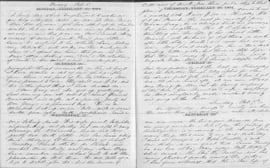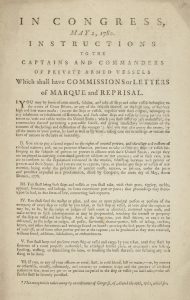
I was recently enlisted to help my boyfriend clean out his mother’s basement; while not the most exciting of tasks, it actually led to an interesting historical discovery. Throughout this process we came across the usual repertoire of..
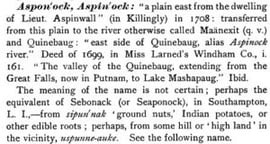
Continue readingA friend from my hometown of Putnam, Connecticut posed a question on Facebook about what the word “Aspinock” literally means. Putnam was incorporated in 1855; in earlier years it had been known as Aspinock, but it was later named Putnam after General Israel Putnam of..
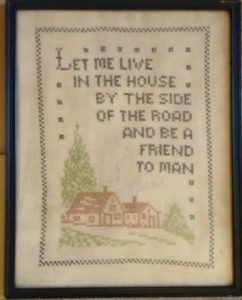
Continue reading →When my brother was little (long ago and not far away), he would lull himself to sleep by reciting the phrase on an antique cross-stitched sampler of a house which hung on the wall over his bed: “Let me live in a house by the side of the road and be a friend to man.”..
Continue reading →Certain diaries, and their authors, become short-hand for a time and place: Samuel Pepys’s diary of seventeenth-century London, for example, or Anne Frank’s diary..
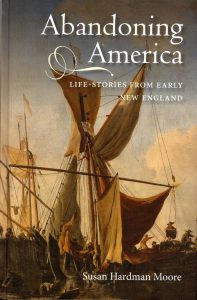
Continue reading →Sir Richard Saltonstall came to New England with the Winthrop Fleet in 1630. He left in 1631. His oldest son, Richard Saltonstall, also returned to England in 1631, where he got married in 1633 and then brought his wife and their nine-month-old daughter back to New..
Continue reading →[Author’s note: This series, on Mrs. Gray’s reading habits, began here.]
In attempting to prove Revolutionary War service for a man from Norwich, Connecticut, who did not show up in any militia lists,..
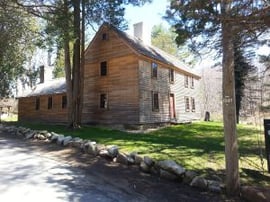
Continue reading →To me, one of the best things about genealogy is learning that you have shared a place with an ancestor. Perhaps you passed through the town where they once lived, or maybe your commute to work takes you by their former home...
Continue reading →Alternate dates of birth for our ancestors, perhaps ranging over several years, are common for many of us, and the reasons can vary considerably. A recent example in my own research came in the form of a deliberate change of birth..
Continue reading →Genealogists spend a lot of time correcting published genealogical works, which is especially ironic when it comes to Clarence Almon Torrey’s New England Marriages Prior to 1700, published by NEHGS and the work upon which the Early New England Families Study Project is..
Continue reading →